
My Father’s Death — Growing Up Fatherless
My father, Circis Kurt Haninke, was unlike anyone else I knew in the world of my childhood.
Enhil was a rural Assyrian village in a neglected region of southeastern Turkey. Most people lived from the land, and formal education was rare. Books, newspapers and other sources of knowledge were difficult to obtain. Yet my father possessed an intellectual curiosity that seemed boundless.
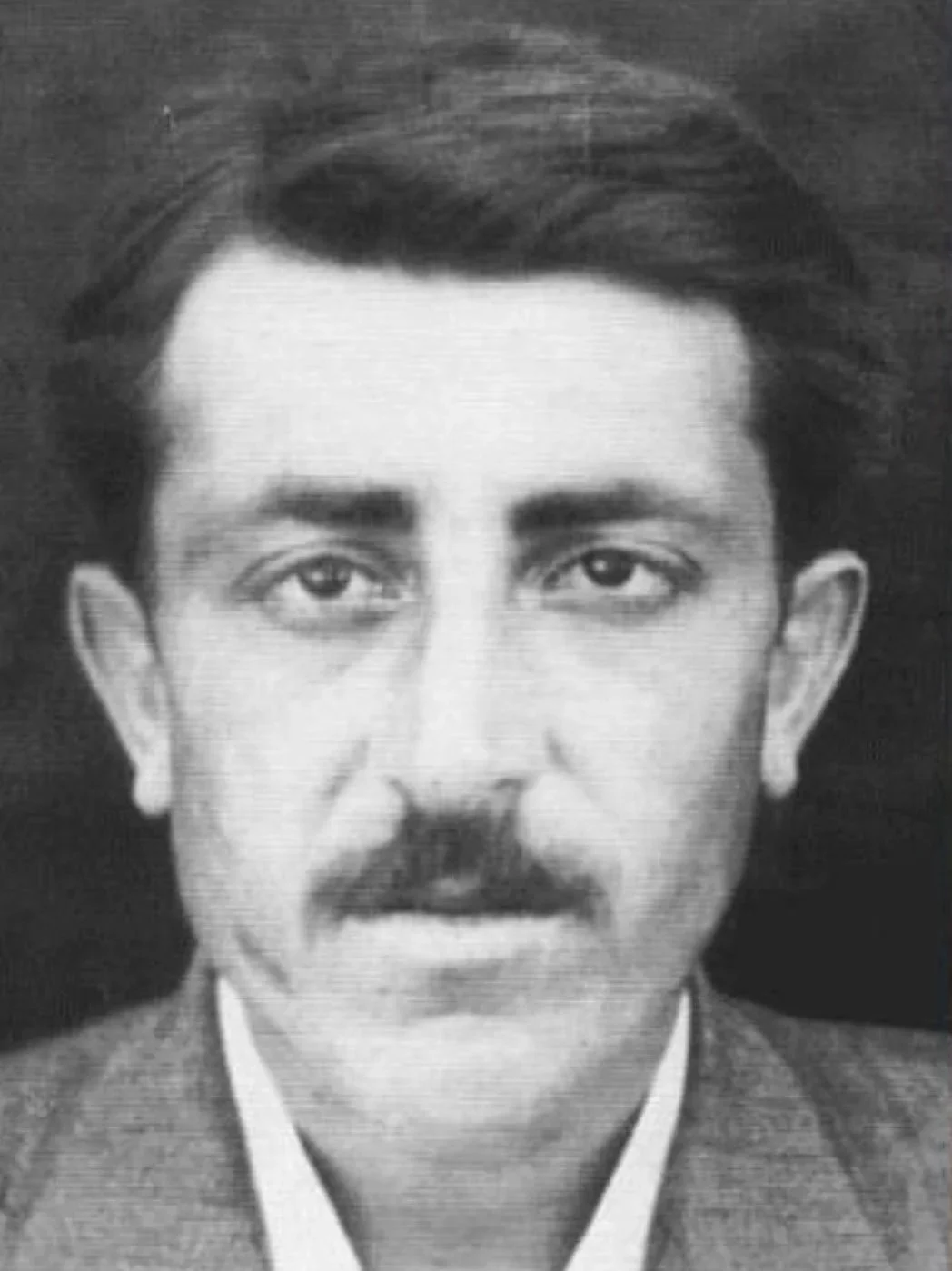
My father, unknown place and date
He spoke and wrote Arabic, Turkish and Assyrian with ease. He also spoke Kurdish fluently and had begun teaching himself English from a book called Teach Yourself English. I inherited that book after his death and kept it for years, until it disappeared while I was completing my military service.
Language was only one of his gifts. Music filled him just as naturally. He played the saz, violin, oud, cümbüş, kemençe, flute and harmonica. People throughout the region spoke of the beauty of his voice. Enhil had many ancient churches, although Sunday services were usually held in two of them. My father served as a deacon, moving between the churches from one week to the next. Villagers would ask in advance where Deacon Circis would be singing so that they could attend that service and hear him.
To me, he was my father. To many others, he was a source of knowledge, comfort and wonder.
A Man People Turned To
My father studied astrology and made complicated mathematical calculations using a large, heavy book. People travelled to him from Mardin, Midyat and the surrounding villages, asking him to interpret their past or tell them what might await them. Decades later, my siblings and I still met villagers who remembered something he had told them and believed that it had eventually come true.
He was also known for practices that people in the region called neotik: old formulas, prayers and talismans used when ordinary solutions had failed. I cannot explain what these practices were. I can only describe what I saw as a child and what hundreds of people around us claimed to have experienced.
A woman might come to our home desperate because her husband had become violent and distant. My father would write something on a piece of paper and give her precise instructions. Later, the villagers would say that peace had returned to the household.
Farmers came to him when a cow rejected its newborn calf or when livestock disappeared in forests inhabited by wolves. They asked him to calm the animal or, as they expressed it, to “close the mouths of the wolves” until the missing herd could be found. People also arrived suffering from toothache. I remember my father taking a small wooden board and several nails. He would read from his book and drive the nails into the wood one by one. I can still picture the relief on their faces when they suddenly declared that the pain had disappeared.
One winter, a vulnerable man named Bishar vanished during heavy snowfall. The cold was severe, and his wife feared that he would freeze to death. Relatives came to my father and begged for help. After asking for the name of Bishar’s mother, my father began making his calculations. Then he gave the search party a detailed route: travel north, turn east near two large trees, follow a narrow path and look inside a small cave.
They followed his directions and found Bishar alive, curled up in the cave exactly as my father had described. The story became part of Enhil’s collective memory.
Whether these events should be called intuition, hypnosis, spiritual practice or something else, I do not know. I make no claim to understand them. What I know is that people trusted my father. They came to him frightened and often left carrying hope.
Yet he was not solemn by nature. He loved laughter and could be mischievous.
One day, a neighbour came looking for an older woman who assisted with childbirth. Her daughter-in-law was in labour and needed help. My father jokingly told her that no assistance was necessary: she should place a kilogram of walnuts beneath the expectant mother, and the baby would come out when it heard the cracking shells.
The woman believed him.
When the experienced birth attendant finally arrived, she discovered walnuts scattered beneath the woman in labour and demanded an explanation. On hearing that Circis had suggested it, she exploded with anger at everyone involved. The whole story travelled through the village, exactly as my father must have known it would.
His humour never made people love him less. He had the rare ability to move among very different personalities without creating enemies. Father Bedros Shushe, one of the most educated Assyrians of his generation, later told me that if my father had lived longer, he might have become one of our people’s wisest and most capable leaders. He had charisma, intelligence and a way of speaking that drew people toward him.
Even during his military service, those qualities may have saved his life. According to the story passed down to us, he was captured near the Bulgarian border while standing guard. His captors were so affected by the way he spoke—and, when they learned it, by the fact that he was Christian—that they released him unharmed and guided him back toward the border.
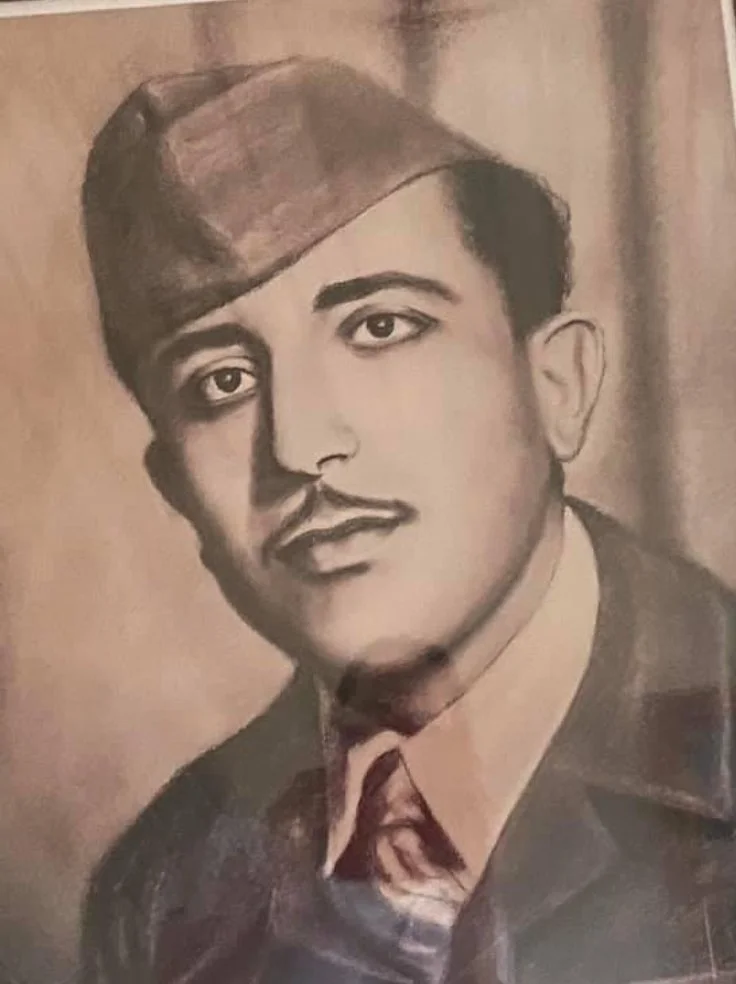
My father in military service
But for all the futures he was said to have read for others, it was the prediction about his own life that would haunt our family forever.
The Week He Feared
My father told those closest to him that a particular week carried grave danger. If he survived it, he believed he would live to be approximately eighty-five. If he did not, he said that his death would come through an object made of metal.
The warning frightened him so deeply that he remained at home and tried to avoid every possible risk. He wanted only to wait until the week had passed.
Near its end, his childhood friend Melke Challo came to our house. My mother told him that my father was sleeping and did not want to be disturbed. Melke entered anyway and found my father pretending to be asleep. His mother had prepared kutle, my father’s favourite food, he said, and there was homemade wine waiting for them. He refused to accept no for an answer.
My father explained the warning in his horoscope book and pleaded to remain at home just this once. Melke laughed at the prediction. He swore that he would not eat unless my father joined him.
Reluctantly, my father went.
As they walked through the village, they heard shouting. Melke recognised the voice of his uncle, Gevriye Challo, a man known for becoming involved in disputes. He wanted to see what was happening. My father, terrified of anything that might place him in danger during those final hours of the week, begged him to continue to dinner instead.
Melke insisted.
When they approached the gathering, they saw another of my father’s childhood friends, Yusef, standing on the roof of a house with a rifle aimed toward Gevriye. Yusef’s brother Shamoun rushed to stop him. As he pushed the rifle upward, away from the crowd, the weapon discharged.
The bullet crossed the open space and struck my father in the right side of his abdomen before exiting through his back.
Of all the people gathered there, it found the man who had spent the entire week trying to escape precisely such an event.
“You Must Become the Man of the House”
Panic spread through the square near Mor Kuryakos Church. Some villagers ran after the men they blamed, while others rushed to my father. They brought a stretcher from the church and placed him on it. There were no cars in the village and no proper road to carry him swiftly to a hospital. Men would have to bear him on their shoulders toward Midyat.
Before they left, my father asked to see me.
A man named Circis Dolan found me playing at a relative’s home with another boy. He took me by the hand and said that my father wanted me.
When I reached the church square, I saw a crowd gathered around the stretcher. My father was covered in blood and in terrible pain. I was about eight years old—too young to understand what death was about to take from us.
He kissed me.
“My son,” he said, struggling to speak, “I am going to a doctor who will make me well again. But I need to ask you for something.”
“Of course, Father,” I answered.
“Listen carefully. If I do not return, you must become the man of the house. Do you understand?”
I said that I did.
But I did not. Not then.
His words lodged inside me long before I was old enough to grasp their weight. With every passing year, I understood more fully what he had asked of me. Those words shaped my love for my siblings, my sense of duty and the responsibility I have carried throughout my life. Nothing has ever been able to weaken the almost fatherly feelings I developed toward them.
The men carried my father roughly ten kilometres to the hospital in Midyat. The doctor there immediately concluded that he needed specialist surgery at the state hospital in Mardin. My grandmother, Macida—known to everyone as Maco—found a car, and they travelled there as quickly as they could.
At Mardin, a senior doctor examined the wound and gave the family hope. Because the bullet had entered the right side of the abdomen, he believed my father could be saved. The operating room was prepared, and surgery began.
Then the country outside the hospital erupted.
The Operation That Was Never Finished
On 27 May 1960, the Turkish military seized power. Government offices, police stations, broadcasting facilities and other state institutions were taken under military control. According to the account my grandmother repeated throughout her life, soldiers entered the hospital while my father lay open on the operating table.
They ordered everyone to leave the building immediately.
The surgeon protested. He was in the middle of an operation, he told them. My father would die if he were abandoned before the internal bleeding had been stopped and the incision closed. He asked for ten minutes—only enough time to complete the most urgent work.
The soldiers refused.
My grandmother remembered the doctor standing his ground even after being struck. Nurses, relatives and hospital staff were forced from the building. She, too, was driven out, leaving her only son behind in the operating room.
Whenever she told us what happened, she wept and accused herself.
“Why did I leave him?” she would cry. “Why did I not refuse? Why did I not let them kill me there, so I could make the same journey as my only beloved son?”
As children, we sometimes cried with her. But she had not abandoned him willingly. She had been removed by armed men and carried a mother’s impossible guilt for the rest of her life.
When the family and medical staff were able to return, they found that my father had died from the bleeding.
The week he had feared was over.
He had died on its final day, struck by metal, just as he believed his calculations had foretold.
How could he have anticipated it? What was contained in the enormous book from which he made his calculations? Was it knowledge, coincidence, intuition or faith?
I cannot answer those questions. Perhaps no one ever will. I can only say that his warning was known among the people of Enhil before the shot was fired, and the memory of it has survived for generations.
When the Sky Wept
Another event from his funeral became part of the village’s memory.
It was the height of the dry season in Tur Abdin. The earth was split with cracks, and rain was almost unthinkable. Yet as my father’s body was lowered into the grave, a small cloud formed above the village. It grew rapidly, and rain began to fall with such force that water ran through the streets in streams.
I remember the villagers murmuring around us:
“Even the sky is weeping for our beloved Circis.”
Whether one sees this as a sign or as an extraordinary turn in the weather, the image has never left me: the dry earth opening to receive my father while rain fell upon a grieving village.
His death affected far more than our household. Enhil and the surrounding villages seemed to enter a long period of mourning. People struggled to accept that Circis was gone. They treated my siblings and me as though we were their own children, determined that the man they loved would not disappear without leaving a living legacy.
My mother descended into a grief that lasted for years. My youngest brother, Augin, was only a few months old and became thin and sickly while nursing during the deepest period of her depression. My older sister Seyde and I were old enough to retain clear memories of our father and of everything that happened. That became both a gift and a burden.
At the time of writing, more than half a century has passed. Yet for Seyde and me, the absence of our father has never become remote. Some memories remain as vivid as though they belonged to yesterday.
What pains me most is not simply that he died. It is imagining how happy and proud he would have been to know his grandchildren. I recognise something of him in my children and in several of my nieces and nephews: a talent, a turn of mind, a warmth, a stubbornness or a hunger for knowledge. Each resemblance brings me comfort.
His final request also remained with me. To become “the man of the house” did not mean merely becoming an authority. It meant protecting my siblings, carrying responsibility before I was ready and trying to live in a way worthy of the father whose name opened hearts throughout our village.
That responsibility passed into the way we raised our own children. We tried to build family life around knowledge, human warmth, honesty, trust and the courage to develop one’s gifts. Whether we succeeded is for those who know our children to judge.
Much more could be written about Circis Kurt Haninke. No chapter can contain an entire human being, especially one whose presence continued to grow in the memories of others after his death.
But perhaps this is where his immortality resides: in the stories the villagers still tell, in the abilities carried by his descendants, in the rain remembered over his grave—and in the words he entrusted to a frightened young boy beside Mor Kuryakos Church.
If I do not return, you must become the man of the house.
I did not understand him then.
I have spent a lifetime understanding him since.
